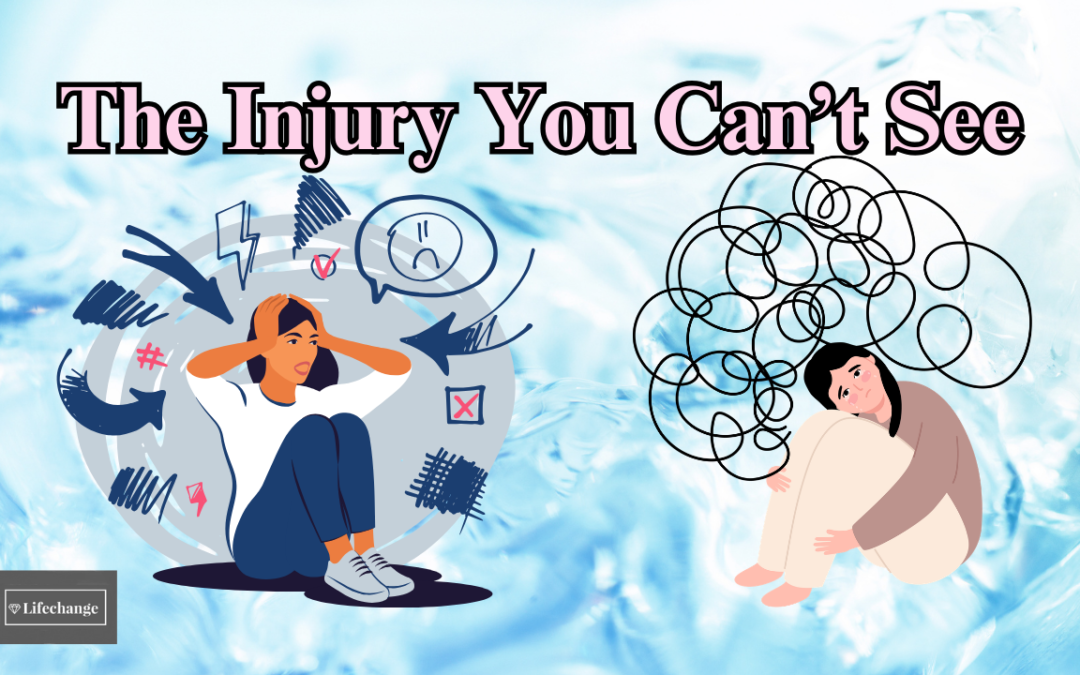
Why Domestic Abuse Trauma is More Than “Just” PTSD
After escaping an abusive relationship, many survivors expect to be met with an immediate sense of relief—a lightness of spirit that finally matches their physical freedom. Instead, many find themselves trapped in what can only be described as a “zombie state.” Take the case of Sophia. Immediately after leaving her abuser, she was petrified to be alone. She found herself following a friend from room to room in her own apartment, unable to perform the simplest tasks of self-care. She had to be reminded to eat; she needed help just to navigate a grocery store. Even years later, the smallest noise could send her heart rate skyrocketing, triggering a stress rash and physical shaking.
If you feel like Sophia—distracted, hyper-vigilant, or emotionally paralysed—it is not because you are weak or “broken.” At lifechangeplans.com, our mission is to remind you that your brain is, in fact, highly intelligent. It has adapted with remarkable precision to survive an environment of high-stakes, unpredictable danger. To heal, we must move beyond the narrow physical definitions of abuse and explore the profound, often invisible psychological injuries that remain. This is not just a “bad memory”; it is a physiological rewiring that demands a specific kind of medical and emotional intervention.
C-PTSD: The “Silent Epidemic” of Relational Trauma
For decades, the term PTSD (Post-Traumatic Stress Disorder) was the primary label for trauma. However, clinicians now recognise a crucial distinction between standard PTSD and Complex PTSD (C-PTSD). Standard PTSD typically results from a single traumatic event—a car accident, a natural disaster, or a sudden assault. C-PTSD, however, is the result of prolonged, repeated trauma occurring within a relationship of significant power imbalance where escape is difficult or impossible.
In the world of domestic abuse, C-PTSD is the “silent epidemic.” Clinical research, such as the Fillol study, reveals that CPTSD is twice as prevalent as standard PTSD among survivors of Intimate Partner Violence (IPV). In a sample of survivors, 39.5% met the criteria for CPTSD, while only 17.9% met the criteria for standard PTSD. To reach a diagnosis, clinicians often look for the “Triple-E of PTSD”: Exposure to a seriously threatening event, followed by specific Effects, and the resulting Evidence of impairment.
Disturbances in Self-Organisation
The reason C-PTSD is more common in our community is that the trauma is relational. Because the threat comes from someone who is supposed to be a source of safety, the brain undergoes a fundamental shift in “self-organization.” This manifests as Disturbances in Self-Organization (DSO), which include:
- Affective Dysregulation: Your “emotional weather” becomes unpredictable. You may feel “all over the place,” experiencing intense anger or sadness with little provocation.
- Negative Self-Concept: A persistent sense of being worthless, defeated, or shameful. You may feel as though you are fundamentally “bad” or “wrong.”
- Disturbances in Relationships: An “invisible wall” forms, making it difficult to feel close to others or maintain stable connections, often due to a fear of repetition.
A crucial finding in recent clinical research is the role of Expressive Suppression. This is a maladaptive emotion regulation strategy where a survivor learns to conceal, inhibit, or reduce emotional expression to stay safe. It is the main variable that differentiates C-PTSD from standard PTSD. While a PTSD sufferer might avoid external triggers, a C-PTSD survivor has been forced to “suppress” their very soul to survive.
“Complex PTSD may occur when a trauma is extended or repeated over time, especially in the context of an ongoing relationship… It refers to prolonged captivity with huge power imbalances. The person lives in terror, is frequently dehumanised and the experience is unpredictable.” — Complex PTSD from Domestic Violence
The “Abuser-Virus” and the Dismantling of the Self
Survivors often view their symptoms, such as the “brain fog,” the inability to focus, and the sudden paralysis when trying to set a boundary, as personal failures. You might think, “Why can’t I just be the person I used to be?” Dr James Tobin offers a more accurate, clinical metaphor: the “abuser-virus.”
In this framework, psychological abuse acts as an infection that specifically targets your psychological immune system. Psychological abuse (gaslighting, reality-twisting, and control) serves as the “gateway” to deeper emotional abuse. As the abuser-virus overrides your defences, it begins a systematic dismantling of your self-esteem.
This is not a character flaw; it is a biological infection of the psyche. The virus supplants your healthy self-regard with “diseased notions” of who you are. This erosion of intuition is why you might doubt your own reality or feel a sense of “brain fog.” Your brain isn’t failing; it has been overridden by a virulent source that has planted seeds of self-criticality and helplessness.
“Metaphorically, in situations of emotional abuse, it’s as if the victim’s psychological immune system has become completely overridden by the abuser-virus. This virus now freely enters and proliferates the victim’s psyche and soul, supplanting the victim’s previously healthy self-esteem and positive self-regard with diseased notions of who the victim is and how he or she must act.” — Dr James Tobin, PhD.
Traumatic Entrapment: The Biology of Why We Stay
One of the most damaging questions a survivor faces is: “Why didn’t you just leave?” This question ignores the biological reality of Traumatic Entrapment. When a person is held in an unpredictable, dehumanising environment, the brain enters a state of Trauma Bonding (often called Stockholm Syndrome, a term that many professionals dismiss).
This is not “love,” and it is not “weakness.” It is a biological success. In an intense interpersonal threat, the brain uses involuntary defence mechanisms. Fight, Flight, Freeze, Flop, or Fawn. The “fawn” response, pleasing and appeasing the abuser, is a highly effective survival mechanism. By turning to the abuser for comfort or trying to de-escalate their anger, the brain is attempting to survive the next ten minutes. Maybe the reason why I was the one always apologising when he was angry and verbally aggressive, as if I had been the cause of his outburst.
Understanding this removes the heavy burden of shame. Staying or returning was not a lack of logic; it was your nervous system choosing the most viable path to keep your heart beating in a situation of extreme “Traumatic Entrapment.”
The Fallacy of the “Post” in PTSD
The “P” in PTSD stands for “Post,” implying the trauma is in the past. But for survivors of domestic abuse, the trauma is often a living, breathing experience. Clinicians call this Continuous Traumatic Stress.
The brain is a guardian, not a traitor. It cannot begin the heavy lifting of processing “past” trauma if it is still “geared up for current danger.” For many, the environment remains unpredictable and high-stakes long after the physical separation. This is caused by:
- Ongoing legal proceedings and high-conflict custody battles.
- Continued stalking, harassment, or digital abuse.
- The proximity of the perpetrator and a lack of restraining orders that provide true, felt safety.
If your subconscious mind is still lingering in a state of fear, it is because the threat is not yet “post.” Your hyper-vigilance is a logical response to a situation where the “fear of repetition” is based on actual, ongoing risk.
Collateral Damage: The Radiating Injury
The injury of domestic abuse is rarely contained within the couple. It radiates outward, creating collateral damage that impacts every corner of society.
- The Elderly: This is a hidden crisis. In the UK alone, over 280,000 people aged 60 to 74 experience domestic abuse annually. Shockingly, older victims are nearly as likely to be killed by their own adult children or grandchildren (44%) as by a partner.
- Children and Adolescents: Approximately 30% of youth in two-parent homes witness domestic violence. Between 13% and 50% of these children develop clinical PTSD symptoms. We also see the rise of Adolescent to Parent Violence and Abuse (APVA), where traumatised youth direct aggression toward their parents as a result of the chaos they’ve endured.
- Intergenerational Trauma: Trauma is often passed down through trauma-informed parenting. A survivor may become irritable, distracted, or emotionally numb because their nervous system is stuck in survival mode, inadvertently affecting their child’s sense of security.
- Substance Abuse and Health: The “self-medicating” cost is staggering. Survivors are 13.5% more likely to be alcohol dependent (compared to 1.4% of non-victims) and 22.8% more likely to use illicit drugs to numb the pain of an unregulated nervous system.
- Work and Friendships: Trauma “derails” careers through avoidance behaviours and poor decision-making. It creates “invisible walls” in friendships where a survivor may misinterpret the intentions of those trying to help, leading to further isolation.
Reclaiming the Immune System: The Path to Recovery
Recovery is not about “fixing” a broken person; it is about healing a predictable injury. It is a non-linear journey of reclaiming your autonomy and dignity.
The Foundation: Safety First. Safety is the “medical requirement” for healing. Your brain cannot “down-regulate” or stop “gearing up for danger” until your environment is secure. This is why multidisciplinary action, legal, financial, and social protection, is the first step of the healing process.
Evidence-Based Clinical Treatments. Once safety is established, specific therapies can help “destroy the virus”:
- EMDR (Eye Movement Desensitisation Reprocessing): Effectively moves traumatic memories from the “current” threat centre of the brain to long-term storage.
- CBT and CPT (Cognitive Processing Therapy): Specifically targets the “diseased notions” of self-worth.
- DBT and STAIR-MPE: The STAIR (Skills Training in Affective and Interpersonal Regulation) model is specifically designed to help survivors manage DSO symptoms like affective dysregulation and relationship disturbances.
Holistic Reconnection Because trauma causes us to detach from our bodies, recovery must involve physical reconnection.
- Mindfulness and Meditation: Proven to “quiet the noise” of remnants of doubt and echoes of the abuser’s voice.
- Light Exercise: Walking, swimming, or dancing reminds the survivor that they “live in a body.” It is a way to ground the self in the present moment.
“It takes time and patience; it’s not linear. But there’s no reason people can’t expect to heal.” — Dr Carole Warshaw, M.D.
In 2020, after the discard, I had one immediate thought which came to me on the night he terminated our relationship. I‘m going to write my story. The second thought was to create a Mindfulness and Meditation Retreat and remain in Spain, offering a retreat experience. – Author.
Conclusion
If you are struggling today, hear this: your reactions are a normal response to an abnormal, dehumanising environment. You are not a “wreck”; you are a survivor managing a significant, high-intensity psychological injury. Your brain did exactly what it was designed to do. It kept you alive.
As a society, we must shift our perspective. We must ask: How can we stop viewing survivors as “disordered” and start treating them as “injured and healing”? Only when we recognise the “abuser-virus” can we provide the “psychological medical intervention” necessary to destroy it.
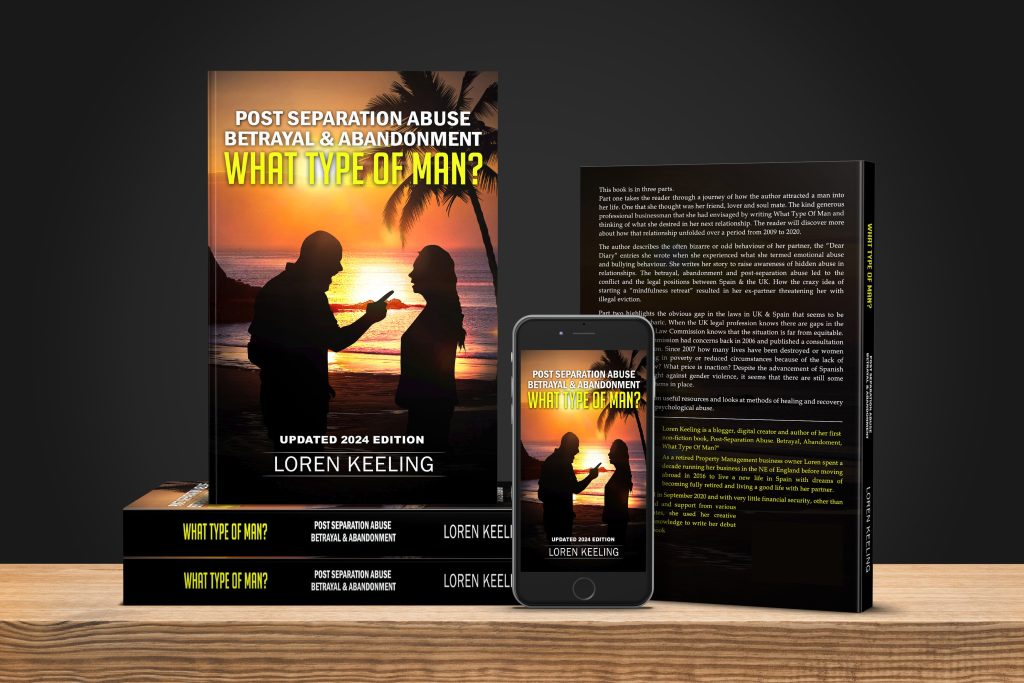
Support the Mission. At lifechangeplans.com, we are a non-profit project dedicated to giving survivors the tools to reclaim their dignity. You can help us reach more people. 100% of the royalties from the book What Type of Man? Go directly to supporting our advocacy and education projects. By purchasing a copy, you aren’t just reading a book; you are funding the “psychological immune system” of a survivor who is currently fighting to see the light.
Available Worldwide in English and Published in Spanish
You are not alone, and you are not broken. You are simply healing from the injury you can’t see.
Read Emotional Energy Spiral
FREQUENTLY ASKED QUESTIONS.
Survivors of domestic abuse often have several recurring questions regarding their experiences with traumatic stress. Here are the most frequently asked questions identified:
What is the difference between PTSD and Complex PTSD (CPTSD)?
While both conditions arise from trauma, PTSD is often the result of a single traumatic event (like a car accident). In contrast, CPTSD typically develops from prolonged, repeated trauma, such as sustained domestic violence or coercive control. To be diagnosed with CPTSD, a person must meet the three core criteria for PTSD: re-experiencing, avoidance, and hypervigilance and also demonstrate Disturbances in Self-Organisation (DSO). These disturbances include difficulty with emotional regulation, a persistent negative sense of self, and ongoing complications in maintaining relationships.
Can I have PTSD if there was no physical violence?
Yes. Domestic abuse is defined as a pattern of controlling, coercive, threatening, or degrading behaviour, and it does not always involve physical violence. Psychological, emotional, financial, and digital abuse are all forms of domestic violence that can lead to PTSD or CPTSD. Psychological abuse is often a “gateway” to emotional abuse, which dismantles a person’s self-esteem and causes significant emotional injury.
Why didn’t I fight back or leave the relationship sooner?
Survivors often feel shame or confusion about their response to abuse, but the sources explain that humans have little control over involuntary brain defence mechanisms. The “fight, flight, freeze, flop, or fawn” responses allow no room for logic in the moment of threat. Additionally, trauma bonding can act as a survival strategy where a victim “pleases and appeases” an abuser to temporarily de-escalate danger, leading the victim to turn for comfort to the very person causing them harm.
Why does the trauma still feel “ongoing” even after I have left?
Recovery is difficult because, in many cases of domestic abuse, the trauma is not actually in the past. If an abuser remains close by, or if there is unpredictable ongoing litigation (vexatious litigation), the survivor’s brain remains “geared up for current danger”. This is often referred to as continuous traumatic stress, which prevents the nervous system from returning to a state of safety and makes it difficult to process previous events.
How has the abuse changed the way I think and feel?
Abuse can cause a “brain fog” that paralyses a survivor’s ability to set boundaries or listen to their own intuition. It often leads to a “paranoid frame of mind” where even benign actions from others are interpreted as threatening because the subconscious is hyper-aroused and ever-vigilant. This “infection” of the psyche can override a person’s healthy self-esteem with “diseased notions” of who they are, planted by the abuser.
Is it possible to fully heal?
Yes. Survivors need to understand that it is never too late to seek help, even many years after the abuse occurred. Effective treatments include trauma-focused therapies like EMDR (Eye Movement Desensitisation Reprocessing) and CBT (Cognitive Behavioural Therapy). While healing is described as non-linear and requiring patience, experts state there is “no reason people can’t expect to heal” once they have established a foundation of safety.
Research Sources
https://reggiedford.com/how-does-trauma-show-up-in-relationships-a-beginners-guide/
https://www.iesohealth.com/wellbeing-blog/why-survivors-domestic-abuse-experience-ptsd
https://pmc.ncbi.nlm.nih.gov/articles/PMC8682852/
https://www.ptsduk.org/what-is-ptsd/causes-of-ptsd/domestic-abuse/
https://somersetdomesticabuse.org.uk/the-impact-of-domestic-abuse-on-mental-health-beyond-ptsd/
https://jamestobinphd.com/psychological-and-emotional-abuse/
https://www.domesticshelters.org/articles/identifying-abuse/complex-ptsd-from-domestic-violence-persistent-trauma-big-effects