
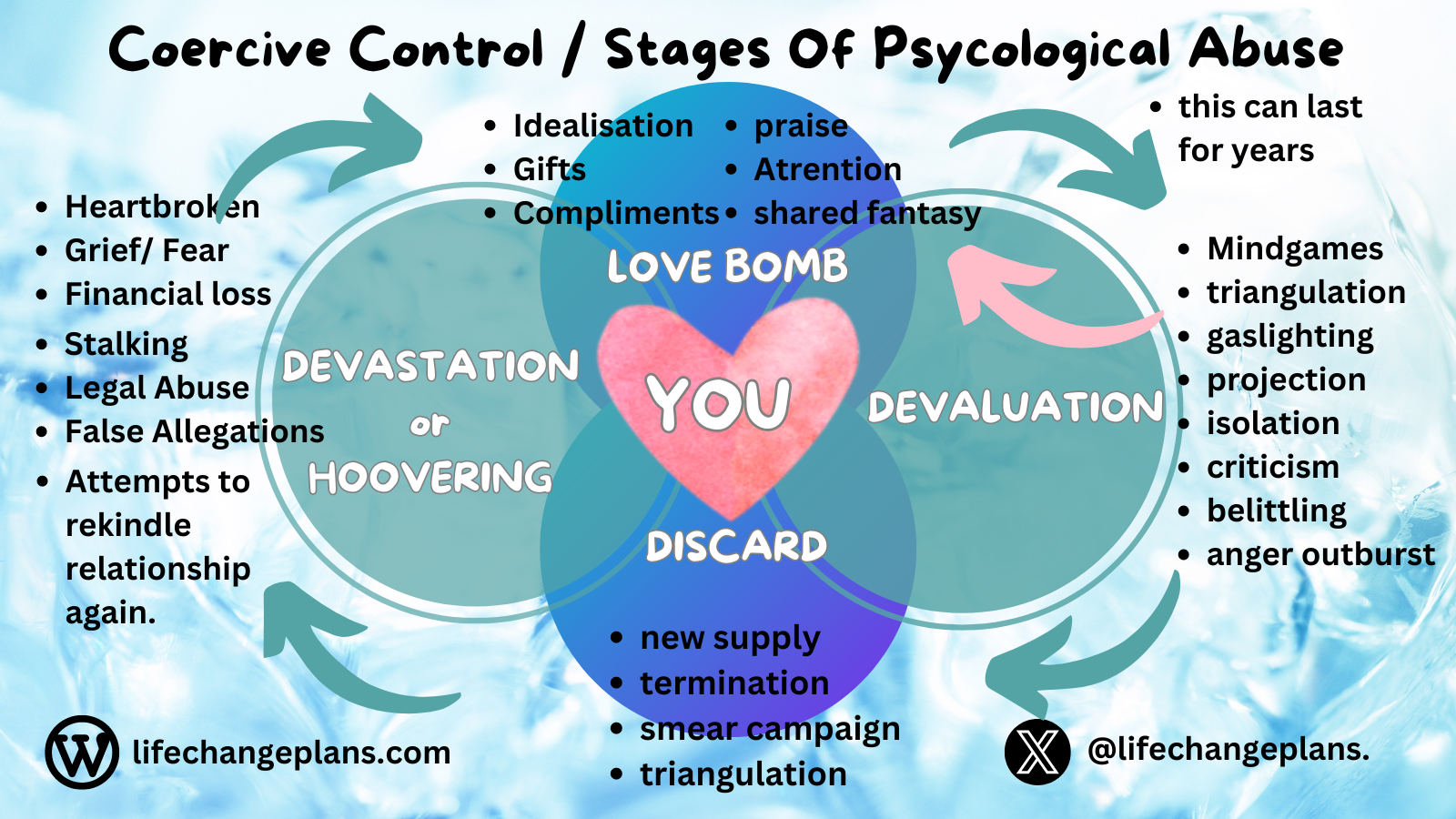
The Path to True Transformation
You’ve finally done it. You’ve packed the bags, signed the papers, or walked out the door. You were told that leaving was the hardest part. You expected a sense of relief, a “clean break”, where the chaos would finally settle into a quiet, new beginning.
But for many survivors, there is a hidden danger, an ex-spouse or partner who exhibits the behaviour of narcissistic or Cluster B personality disorders, the possibility that the end of the relationship is where post-separation abuse starts. Instead, a new beginning, you are thrust into a Divorce or, in my case, a separation from a non-married relationship, which involves devastating consequences.
Leaving a narcissist isn’t the end of the story; it is often the beginning of a more calculated, sophisticated, and exhausting phase known as post-separation litigation abuse. This is a reality many aren’t prepared for, where the legal system is weaponised and the “discard” becomes a campaign of destruction.
If you feel like you’re still fighting a war you thought you’d left behind, you aren’t alone—and you aren’t “crazy.” Today, we’re breaking down the most impactful and often counterintuitive takeaways from the front lines of this psychological warfare to help you navigate from trauma to transformation.
1. The Separation Isn’t an Exit, It’s a Trigger for Escalation
The most dangerous myth we believe is that “everything will be fine once you leave.” In reality, research suggests that up to 90% of women experience post-separation abuse. To a narcissist, your departure isn’t a boundary; it’s a loss of control that triggers “narcissistic rage.”
Threats and Violence: Individuals with BPD may engage in explosive abandonment rage, and narcissists may use violence or intimidation to prevent the loss of power.
– Psychology Today
When you leave, or if the relationship is terminated, you stop being a source of “supply” and start being a “target.” The abuse doesn’t stop; it simply changes shape. It moves from behind closed doors into the public sphere, the courtroom, the school gates, and the digital world. A survivor can experience loss of identity and self-worth. The long-term exposure to devaluation can leave the ex-partner with profound self-doubt, confusion, and lowered self-esteem.
“To a narcissist, divorce is a game of psychological warfare. To win, history must be rewritten, making them into both the victim and the hero… The person you were married to is gone, morphed into an evil stranger ready for war.”
— Tracy A. Malone, Divorcing Your Narcissist
The Takeaway: Understanding that escalation is a standard tactic—not a personal failure on your part—is the first step in reclaiming your sanity. It’s not that you didn’t leave “right”; it’s that the abuser refuses to let go of the power. Discover the recommended reading from Authors who have written on the subject of “Divorcing A Narcissist”
2. Litigation Abuse: The Courtroom as a Weapon
If you are wondering why your “simple” divorce has dragged on for years, it’s likely not a coincidence. Legal or Litigation Abuse is a strategic move where the abuser uses the judicial system to continue the harassment they can no longer perform at home.
This includes filing frivolous motions, changing lawyers constantly, “forgetting” to sign documents, or making false allegations of neglect. The goal isn’t to reach a fair settlement; it’s to drain your bank account, exhaust your spirit, and keep you tethered to them through constant legal conflict.
Reflection: It is vital to recognise that the court system often rewards the person with the most money and the least conscience.
Legal professionals can be complicit in the abuse tactics. As seen in the experiences of Loren Keeling, a well-funded opponent can use “precarious eviction” laws or complex international regulations to leave a partner stranded. Never attempt to mediate or negotiate without a representative who understands high-conflict personalities. If the courts have not recognised the abuse, or you filed a complaint and the criminal courts dismissed your complaint, it doesn‘t mean the abuse did not happen; it means that the CPS or the Judge does not have enough evidence or understanding to process your complaint.
3. The DARVO Tactic: How You Became the “Abuser”
One of the most disorienting experiences for survivors is seeing their ex-partner play the victim. This is often achieved through DARVO: Deny, Attack, and Reverse Victim and Offender.
The abuser will deny their actions, attack your credibility, and then claim they are the ones being abused, stalked, or controlled. They will present a “twisted speck of truth” and wrap it in an elaborate lie. This is why many survivors find themselves facing smear campaigns among friends and family.
“False allegations will come at you in rapid fire, most holding no more than a twisted speck of truth… Conspiracies against you will escalate into false allegations and accusations that include everything they themselves have been doing all along.”
— Tracy A. Malone
Analysis: This “history rewriting” is a form of gaslighting on a societal scale. It is designed to make you look “unstable” to the court or social services, further isolating you from support. The justice system will believe the person who has lied, cheated and manipulated you for years in a fake, false manipulationship. While you are still in shock, grieving, left struggling financially and emotionally, in fear and uncertainty. Survivors can experience cognitive dissonance, a state of confusion, struggling to reconcile the positive memories of the “love-bombing” phase with the current destructive behaviour.
4. Financial Abuse and the “Precarious” Trap
Financial abuse often becomes most visible during a divorce. It’s not just about “hiding assets”; it’s about creating total dependency. A person with NPD/BPD is often intentionally financially destructive; they would rather litigate than negotiate. They will think nothing of leaving an ex-spouse or partner financially devastated, homeless and even destitute. In many jurisdictions, particularly for cohabiting couples, the law is shockingly unfit for purpose.
In Spain, the concept of “desahucio por precario” (precarious eviction) can be used to evict a long-term, financially dependent partner from a property they helped to make into a home, but did not legally “own” on paper. This is a devastating structural imbalance that leaves many women on the brink of homelessness despite years of contribution to a relationship. The Civil Court, the Judge, and the legal professionals involved ignore the evidence, ignore the dismissed criminal gender violence case. Ignore the false statements provided by the abuser.
The Impact: When an abuser tells you, “Your future security depends upon my generosity,” they are telling you that they intend to use money as a leash. And when they threaten that they can throw you out onto the streets, and follow up with, “It will happen quickly and it won‘t be pleasant” you begin to understand that you are in grave trouble. This is why financial literacy and securing your own records before or during a relationship is a matter of survival. The entrapment and financial dependence usually start long before the victim understands any abuse. Before any living together relationship starts, it is important to discuss what arrangements will be in place if the relationship ends. Order a copy of “What Type of Man?”
5. Using Children as the Ultimate Pawn
Perhaps the most heartbreaking takeaway is the “weaponisation” of children. Post-separation abuse often involves “Counter-Parenting”—deliberately undermining your rules, telling the children lies about you, or creating a “split loyalty.”
The abuser doesn’t necessarily want to spend more time with the children; they want to use the children to cause you pain. This can involve making false reports to social services or withholding child support to cause distress.
Reflection: This tactic creates a “death by a thousand paper cuts” for the survivor. It is an attempt to ensure you never have peace, even when the children are with the other parent. Family courts are becoming a battleground, where legal professionals and Judges label the Divorce as “High Conflict” I recommend reading the book by Kaytlyn Gillis : IT’S NOT “HIGH CONFLICT” IT’S POST-SEPARATION ABUSE When Abusers Weaponize the Courts as a Form of Retaliation
6. The Power of “The Written Word” as a Double-Edged Sword
For many survivors, writing is the only way to make sense of the madness. Documenting the abuse, the lies, and the gaslighting is a vital part of the healing process. However, for some, this act of truth-telling becomes a new front in the war.
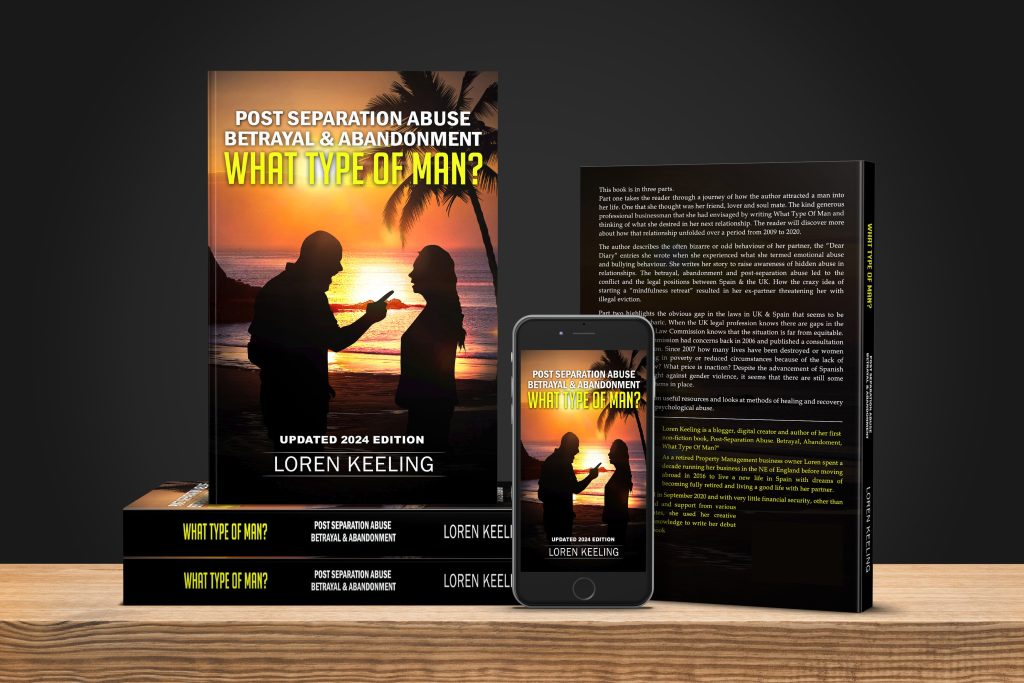
Loren Keeling, the pen name of a survivor and advocate, discovered this the hard way. After publishing her raw and honest account in the book Post Separation Abuse: Betrayal & Abandonment, What Type Of Man?, she was targeted with criminal defamation allegations in Spain.
The abuser’s attempt to silence her through the criminal courts is a classic example of post-separation litigation abuse. Yet, instead of backing down, she used this experience to fuel her mission.
“Publishing your journey… is a courageous act. It shatters the silence, demonstrating that abuse is not a personal failure but a societal problem… It’s a way of turning pain into purpose.”
— Loren Keeling, Life Change Plans
Analysis: When an abuser tries to sue you for “telling your truth,” they are effectively admitting that the truth is their greatest enemy. Writing isn’t just about “sharing a story”; it is an act of reclaiming your identity.
7. Moving From Trauma to a Worldwide Social Mission
The final and most empowering takeaway is that the “discard” doesn’t have to be your destruction—it can be your launchpad.
The author of Life Change Plans, writing as Loren Keeling, has transformed her five-year legal battle into a global movement. She is now advocating for legal reform, particularly for cohabiting couples who fall through the cracks of the system.
Her mission is to use the royalties from her books to fund a Worldwide Social Mission to help more women move from “Trauma to Transformation.” By purchasing her books or supporting the blog, readers aren’t just getting an education; they are investing in a future where the legal system can no longer be used as a tool for abusers.
A Roadmap for Your Future
The journey through post-separation abuse is a marathon, not a sprint. It requires a radical shift in mindset: moving from “victim” to “advocate,” and from “isolated” to “connected.”
As you move forward, remember these three pillars of recovery:
- Documentation is Key: Use tools like MyOnRecord or Bright Sky to keep a factual log of every interaction.
- Radical Acceptance: Stop waiting for the abuser to “see the light.” They won’t. Focus entirely on your own legal and emotional boundaries.
- Find Your Tribe: Abuse thrives in isolation. Seek out communities that validate your experience and offer practical roadmaps for recovery.
The road ahead may be long, but you are already stronger than you realise. You have survived the relationship; now, it is time to survive—and thrive—through the separation.
I am a participant in the Amazon Associates Program. If you purchase through the links, I may earn a small commission at no extra cost to you, which helps support LifeChangePlans.