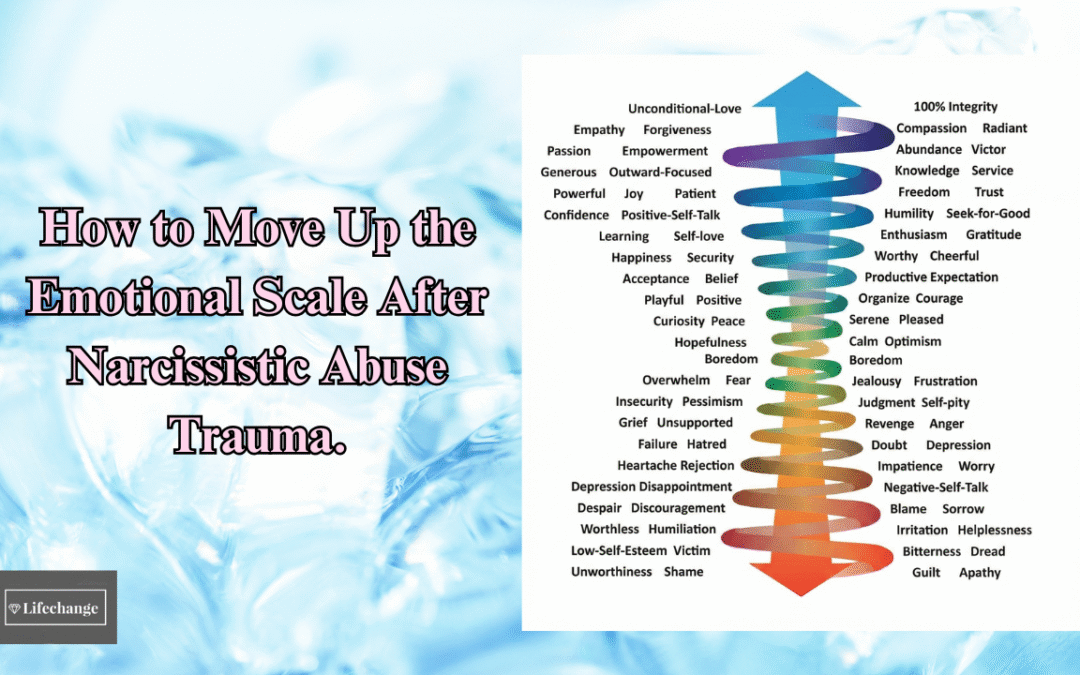
Emotional Energy Spiral: How to Move Up the Emotional Scale After Narcissistic Abuse Trauma.
In the aftermath of deep emotional trauma—especially following narcissistic or emotional abuse—it’s common to feel perpetually stuck in low-vibration emotions. You might know intellectually that you should “think positive” or “choose happiness,” but that advice often feels impossible when you’re navigating profound grief and betrayal.
When I first encountered the concept of the Emotional Energy Spiral (often called the Law of Attraction Emotional Scale), it was a pivotal moment. It didn’t just explain why I felt so lost; it showed me the critical steps needed to heal, proving that anger is not a step back—it is often the powerful lifeline that saves you.
This article will break down the Emotional Energy Spiral, explain why forcing happiness is detrimental to trauma recovery, and outline the necessary emotional processing that moves you from despair to healing.
Understanding the Emotional Energy Spiral and Vibration Chart
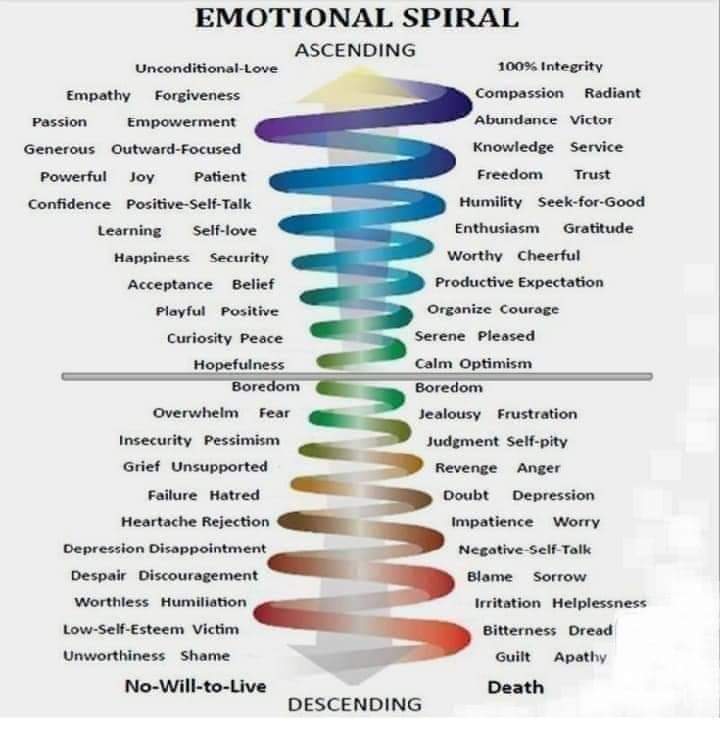
The Emotional Energy Spiral is a map of human emotions, organised by their vibrational frequency. Emotions at the bottom, like shame, apathy, and grief, have a low vibrational frequency and tend to attract more low-vibration situations into your life. The emotions at the top, like joy, passion, and enthusiasm, have a high frequency. During and after narcissistic abuse, we can experience many of the negative emotional energies.
Guilt, Self Blame, Shame, Fear, Anger, Despair, losing the will to live. Slipping into harmful behaviours.
Defining the “Lower Vibration”: Why Shame, Guilt, and Apathy Keep You Stuck
The very bottom of the spiral is characterised by a lack of energy, will, and hope. Emotions like Shame, Guilt, and Apathy are debilitating because they remove your power to act. When you are operating from these deep-seated feelings, it creates an emotional set point that prevents you from even seeing paths out of your situation.
In trauma recovery, these low-vibration states often manifest as deep depression or a feeling of being frozen—unable to make a decision or take any step forward. This is the spiral’s true danger: the inertia of low energy keeps you spiralling downwards.
The Law of Attraction Emotional Scale Explained
While different interpretations exist, the core idea is that each emotion on the scale carries a unique energetic frequency that dictates what you attract into your life.
|
Emotion |
Vibration |
Energy Level |
What it Attracts |
|
Joy, Appreciation |
High |
Empowered Action |
Success, Abundance |
|
Hope, Optimism |
Medium-High |
Forward Movement |
Solutions, Clarity |
|
Anger, Frustration |
Medium-Low |
Energy to Push Back |
Change, Boundaries |
|
Grief, Fear, Shame |
Low |
Stagnation, Helplessness |
More Loss, Isolation |
The crucial insight is that you cannot jump the gap from Shame to Joy. The journey requires incremental steps.
Why Anger is a Critical Step in Trauma Healing
A person cannot possibly move to joy and happiness while suffering huge grief and trauma. Any attempt to bypass essential emotions often leads to suppression, which only keeps you cemented in a low vibrational state. For survivors of abuse, anger is not the enemy—it is the first true sign of returning life.
The Myth of “Jumping to Joy” After Huge Grief and Loss
In the immediate wake of emotional or narcissistic abuse, you are processing a monumental loss: the loss of a relationship, the loss of your sense of self, and the loss of the future you believed you had. This process demands Grief. Trying to ignore this grief by forcing gratitude or positivity is a form of self-gaslighting that hinders authentic trauma healing.
The spiral teaches us that healing is gradual. To get from Apathy (no energy) to Joy (high energy), you must pass through the higher-energy “negative” emotions, such as Disappointment, Frustration, and Anger.
The Power of Will: Why Anger is Better than No Will to Live
My own experience following betrayal and post-separation abuse brought me to a place of utter despair. I found myself in 2020 with no will to live, completely depleted and stuck at the bottom of the emotional spiral.
Finding the emotion of Anger felt like a miracle. Anger requires energy. Anger requires a sense of self-worth that says, “What happened to me was wrong, and I deserve better.” Anger is the fire that burns through the apathy and shame that keep you paralysed. It signifies the return of your will—the will to fight, the will to survive, and the will to create boundaries.
Channelling High-Vibration Anger: From Reaction to Action
The key difference lies in how you express it.
- Low-Vibration Anger (Rage, Blame): This is destructive, keeping you focused on the abuser, and it drains your energy.
- High-Vibration Anger (Moral Outrage, Frustration): This is constructive. It’s the emotion that fuels a survivor to:
- Set and enforce solid boundaries.
- Gather evidence and seek legal support.
- Protect your children and your future.
- Write a book to share your truth and help others.
Anger, when channelled, is not a feeling of being out of control; it is the feeling of taking control back.
★☆★ Amazon UK ★☆★ ★☆★ Amazon US ★☆★Digital Platforms ★☆★ ★☆★ Follow Me Here ★☆★
Regain A Sense Of Emotional Balance
When we find ourselves in the downward emotional energy spiral or a “black hole” of negative emotions, it can indeed be challenging to pull ourselves out. However, with patience, self-compassion, and the right strategies, it is possible to gradually dig ourselves out and regain a sense of emotional balance. Here are some steps you can take:
- Recognise and acknowledge your emotions: Begin by acknowledging and accepting your feelings without judgment. Understand that it is natural to experience ups and downs in life, and it’s okay to feel overwhelmed or stuck at times.
- Practice self-compassion: Treat yourself with kindness and understanding. Recognise that everyone goes through difficult periods, and you are not alone in this. Be patient and gentle with yourself as you work through your emotions.
- Reach out for support: Don’t hesitate to lean on others for support. Talk to a trusted friend, family member, or therapist about what you’re going through. Sharing your thoughts and emotions can provide relief and gain a different perspective on your situation.
- Engage in self-care: Prioritise self-care activities that help you relax, recharge, and uplift your spirits. This could include exercise, spending time in nature, practising mindfulness or meditation, journaling, listening to music, or engaging in hobbies you enjoy.
- Break the negative thought cycle: Negative thoughts often contribute to the emotional energy spiral. Challenge and reframe negative thinking patterns by consciously focusing on positive aspects of your life, practising gratitude, or using affirmations to shift your mindset.
- Set achievable goals: Break down your tasks and responsibilities into smaller, manageable goals. Accomplishing these smaller goals can help you regain a sense of control and accomplishment, boosting your emotional well-being.
- Seek professional help if needed: If your emotional state persists or worsens, it may be helpful to seek therapy. A trauma-informed therapist or psychologist can provide you with additional guidance, support, and interventions tailored to your specific needs. Or a trauma-informed mentor like me.
Remember, digging yourself out of the downward spiral of emotional energy takes time and effort. Be patient with yourself and celebrate small victories along the way. With persistence and self-care, you can gradually regain your emotional balance and move forward towards a more positive and fulfilling state of mind.
Practical Steps to Raise Your Emotional Energy Vibration
Once you are in the energy of anger (or even frustration), you have momentum. Now, you can begin the mindful work of elevating your emotional energy vibration and sustaining a higher frequency. It‘s like turning the dial to find a new frequency to tune into a radio station, or tweaking the temperature on the thermostat to go from cold to warm.
Processing Emotions: Working Your Way Up the Emotional Scale
- Acknowledge and Validate: Do not fight where you are. If you are angry, say, “I am angry, and that is a healthy emotion right now.”
- Move Up the Scale: Look for the next highest rung. If you are in Grief, can you move to Disappointment? Disappointment suggests you have a minimum expectation of how you should have been treated.
- Find Relief: Every emotion above apathy and despair offers a measure of relief. Relief is the goal, not joy. When you feel anger, it’s a relief from the numbness of apathy.
- Embrace Action: Use the energy of your current emotion to take one small, focused step. If you’re frustrated, use that frustration to clean out a cupboard or finally make that counselling appointment.
What can we do to help ourselves if we are unsupported and isolated from friends and family?
If you find yourself unsupported and isolated from friends and family, it can be more challenging to overcome grief and the downward emotional energy spiral. However, there are still steps you can take to help yourself.
1. Seek online communities: Look for online communities or support groups related to your specific struggles or interests. Engaging with like-minded individuals can provide a sense of connection, understanding, and support, even if it’s in a virtual setting.
2. Reach out to helplines or hotlines: Many helplines and hotlines offer anonymous support for various emotional challenges. They can provide a listening ear, offer guidance, or connect you with additional resources. Research and reach out to relevant helplines in your area, keep the numbers in your mobile.
3. Consider therapy or counselling: Look for online therapy or counselling services that offer remote sessions. Many therapists now provide virtual sessions, which can be a valuable resource for individuals who are isolated. Online therapy can provide a confidential space to express your emotions, gain insights, and develop coping strategies.
The Daily Practice of Shifting Your Emotional Frequency
Healing is built on daily habits that honour your truth while gently guiding you upward:
- Mindful Media: Be intentional about the books, podcasts, and articles you consume. Does it support your healing journey or trigger old wounds?
- Body Movement: Emotions are energy. Gentle exercise, dancing, or even shaking your limbs can physically release trapped lower-vibration energy.
- Boundary Setting: Every time you successfully enforce a boundary, you affirm your worth and move toward Empowerment, a higher frequency emotion.
Educate Yourself
Explore self-help books, websites, podcasts, or online courses that address the specific issues you’re facing. These resources can offer guidance, techniques, and practical advice to help you navigate through difficult emotions on your own.
Engage in activities that promote self-care and self-soothing. This could include practising mindfulness or meditation, engaging in creative pursuits, taking soothing baths, practising deep breathing exercises, or finding solace in nature. Find what works for you and make it a priority.
Use this time of isolation to focus on personal growth and self-improvement. Explore new hobbies or interests, learn new skills through online courses, or engage in activities that bring you a sense of accomplishment and fulfilment.
Be kind to yourself and practice self-compassion. Remind yourself that it’s okay to feel lonely or unsupported at times and that you deserve care and understanding. Treat yourself with the same level of kindness and compassion you would offer a close friend.
While being unsupported and isolated can be difficult, remember that there are resources available to help you navigate through challenging times. Take advantage of online communities, helplines, and remote therapy options. Focus on self-care, personal growth, and self-compassion. With time and persistence, you can still make progress in managing your emotions and finding a way out of the emotional energy spiral.
How do we start to rebuild when we are left emotionally or financially devastated?
Rebuilding after experiencing emotional or financial devastation due to abuse can be a daunting task, but it is possible to regain control and move forward. Here are some steps to consider:
If you are still in an abusive situation. Ensure your safety first.
Make a list of local authorities, helplines, or support organisations that specialise in supporting abuse survivors. Hopefully, they will provide guidance, resources, and assistance in finding a safe environment. Unfortunately, it can be a bit of a postcode lottery, as I am sure many of you will affirm. As I know from experience and the experience of many other women.
When money is an issue and paying for professional services is not possible, search for online groups that offer free support networks from people who have gone through what you are experiencing. The main thing is that you can process your emotions and develop coping strategies. Finding a network of compassionate people who can validate your experiences and provide encouragement can be invaluable during the recovery process.
Make Sure You Know Your Legal Rights And The Financial Support Available
Evaluate your financial situation: prioritise your immediate needs. Are there assistance programs or non-profit organisations that provide support for abuse survivors in your city or region? Be resourceful, are there items you no longer need that could be sold?
Have you been left with debts that maybe you were coerced into? In the UK, economic and financial abuse is starting to be recognised, the organisation Surviving Economic Abuse does not offer direct support, but they have campaigned to get this form of abuse recognised in law. Financial institutions are becoming more aware and you may be able to get help with reducing or writing off debts that you have been coerced into from an abusive ex-spouse or partner. Reach out if you need a mentor.
Set some small goals for yourself that will help you regain your financial stability. Eliminate debts. Grow your income. Secure a job. Start a side hustle. Celebrate the smallest of achievements. This could be just the fact that you were able to reach out to a support network for advice. I know how difficult the first steps can be as you build your confidence and your motivation.
Take Small Steps To Regain Your Confidence
Learning new skills. This can improve your employability and open up new opportunities for financial stability. When my confidence was at ground zero many years ago as a stay-at-home mum. I decided to do some volunteer work. So if you are on some welfare or supported payments find out if you can volunteer in your local area as this can help your confidence and meet new people.
Do activities that make you feel good. That could be cooking, gardening, or space clearing, the last one can be a good way to generate a bit of income, going through wardrobes, drawers cupboards to throw items away or recycle or sell. Maybe there are photographic reminders of the past that you no longer want to see anymore. Other things you can do include exercise, meditation, journaling, engaging in hobbies, spending time in nature, or seeking out therapeutic activities like art or music or dancing.
If you have been financially devastated, consider professional guidance for financial recovery. A professional can assist you in creating a budget, managing debt, rebuilding credit, and making informed financial decisions. Remember, healing and rebuilding after abuse takes time, and everyone’s journey is unique. With time, resourcefulness, and the right support, you can rebuild your life and create a brighter future.
Is it as simple as being able to change your thinking and it will change your life?
While changing your thinking can have a profound impact on your life, it is important to recognise that it is not a simple or instantaneous process. Shifting your mindset can be a powerful tool for personal growth and transformation. However, it usually requires time, effort, and consistent practice. Here are some key points to consider:
MINDSET: With a positive and growth-oriented mindset, you can develop resilience and optimism. Gaining a greater sense of control over your life.
CHANGING YOUR THINKING: This involves identifying and challenging negative or unhelpful thoughts and replacing them with more positive and empowering ones. This requires self-awareness, soul-searching, and a willingness to question your beliefs and assumptions.
CONSISTENCY and PRACTICE: Transforming your thinking patterns is not a one-time event but an ongoing practice. It involves reframing negative situations and challenging self-limiting beliefs and “lack” thought patterns, choosing positive thoughts. I used positive affirmations to help me out of a dark place. If you have never practised affirmations just try with two or three affirmations that you can write out and pin up somewhere. Repeat them in the morning and when going to bed.
Here are a couple of affirmations I used back in October 2020.
“I’m still here. I’m still on my feet. I will keep moving until I find the freedom and peace I deserve.”
Daily Wisdom for Why Does He Do That? – Lundy Bancroft
And this affirmation around fear from an online training course, The 8 Spiritual Secrets For Multiplying Your Money.
“I can have fears without my fears having me. I am greater than my fears. I will connect with love, I deserve to have everything I love, and am willing to release my fears and live the life I want to live”
Mary Morrissey
Where to start?
Guilt – Replace self-blame and self-criticism with self-affirmation and self-acceptance.
Shame – Forgiving yourself and others can be a powerful step towards healing.
Fear – Affirmations and mindfulness meditations. Journaling, creative writing.
Anger – Practice controlled anger release, options include recording yourself in a voice memo talking about the things that make you feel angry. Or take a pillow and give it a good thumping. You might even try screaming out loud but not in earshot of people unless you want the police at your door.
Despair – Seek support. We all need help and support at certain times in our life. Trauma therapy, grief counselling, a support group or even a short retreat that gets you completely away from all the negativity and external factors for a while.
Remember all of this takes time to process and recover and rebuild. Try to be kind to yourself and seek support when needed. Just believe in yourself and you will be okay, you can do this.
My Journey: From Stuck in Low Vibration to Survivor
My personal journey of recovery from complex emotional trauma and betrayal is a testament to the power of the Emotional Energy Spiral. When I began to understand the scale, I realised my anger wasn’t a flaw—it was the essential fuel I needed to leave the despair behind.
The Emotional Energy Spiral Explained My Post-Separation Abuse Experience
The low vibration I was in attracted continuous high-conflict situations that were part of the post-separation abuse. Once I understood that my energy was feeding the chaos, I was able to shift from reacting (low-vibration victimhood) to choosing my emotional response (higher-vibration ownership and will). This shift was not instantaneous, but it was the key to my survival.
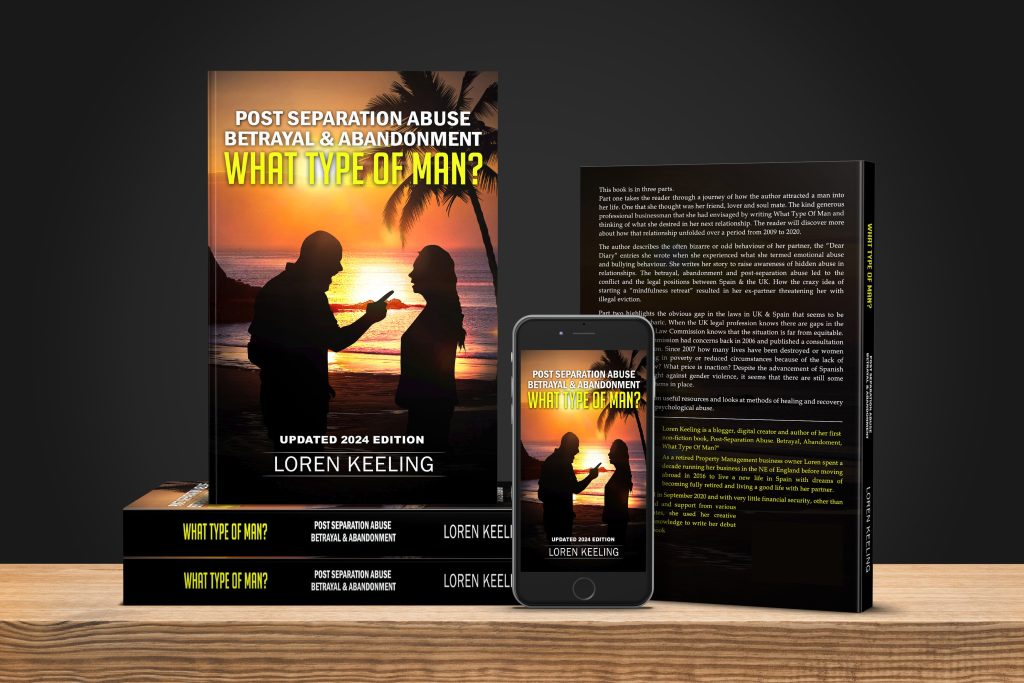
Read the Full Story: What Type Of Man? (Available on Amazon)
If you are a narcissistic abuse survivor or someone dealing with emotional betrayal, I wrote my first book, What Type Of Man? Betrayal and Abandonment, to document the entire experience. It covers the years of hidden emotional and psychological abuses, the shock of the discard, and the legal intimidation of post-separation abuse.
It is a resource for those who need to know they are not alone and for professionals who need to understand how subtle, yet destructive, this form of trauma is.
As a survivor of post-separation abuse, I know firsthand the struggles of navigating a broken system. My first book highlights the gaps in the laws that often fail women. And by speaking out, I want to raise awareness, campaign for action and much-needed change.
★☆★ Amazon UK ★☆★ ★☆★ Amazon US ★☆★Digital Platforms ★☆★ ★☆★ Follow Me Here ★☆★
Conclusion
The Emotional Energy Spiral is not a stick to beat yourself with for “not being happy.” It is a compassionate map that confirms your healing journey must be honoured step-by-step. Embrace the anger, process the grief, and trust the process. You have the will to move up the scale, and every small shift is a profound victory on your path from Trauma to Transformation.